Why We Dance and How to Choose the Right Dance Studio
Every so often, I’ll revisit an earlier piece of writing whose ideas have stood the test of time. This article first appeared in Collage: The Arts in Halifax | A Collection for Young People in 1988. Why we dance lies at the heart of every dancer’s journey. Its central message–that dance is deeply connected to who we are, and that thoughtful dance education matters–is as meaningful today as ever. I’ve revisited that question here, adding further tidbits to think about in this updated incarnation.
“O body swayed to music, O brightening glance,
How can we know the dancer from the dance?”
– W. B. Yeats
I have heard it said, on numerous occasions and in many different ways, that our artists give us the best expression of our view of ourselves. No better example of this is the dance, an art and form of expression that comes from the very core of our emotional and physical selves.
Dance is Part of Being Human
People have always danced. They have danced in celebration, to express individuality, to tell stories or to invoke the gods. They have danced at tribal rituals, to entertain kings, and to affirm their cultural heritage. Whatever the reason, the dance is in everyone, and everyone is the dance.
In current times, the dances may have changed, but essentially, the reasons for dancing are the same as they always have been. We dance at weddings, at social gatherings to meet people, and at national heritage festivals to share our culture and traditions with others. Theatrical performance dance forms, such as ballet, have gone from the courts of kings to theatres, movies, television and the internet. Historically speaking, the additions of jazz, tap, modern dance, and street dance as performance forms are recent but are enormously popular forms of expression and entertainment.
Despite its long history on this earth, dance for many people is still a mystery. It is something often regarded as an elitist, foreign language to be held at a distance, or viewed with curiosity. Truly, there is no deep, dark mystery to the understanding of dance. Enjoy it on your own level, whether it be for an appreciation of beauty, intellectual or emotional stimulation, or an appreciation of the body’s basic rhythms.
Why We Dance
For me, as a student, instructor, performer and choreographer, the reasons to dance have been numerous. Probably the greatest joy and challenge has been the physical mastery of technique. The question for greater skill and pedagogical understanding never ends, constantly presenting new challenges and ultimately a greater sense of achievement.
The kinaesthetic pleasures of dance are easily appreciated by those with athletic inclinations. To jump, roll and spin with abandon and confidence is exhilarating and fun. For others, dance is ethereal grace. They strive to make enormously difficult movements appear effortless, and dance may evoke emotional or spiritual connections. For many, the imagination is the greatest challenge. To express their individuality in unique and unusual ways, and to create new forms of movement, is their reason for dancing. And finally, some are drawn to perform, while others bloom in the classroom. In short, why we dance is unique for every dancer.
Dance Trains the Mind as Well as the Body
Dance not only trains the body, but also the mind. As an instructor, I have found that my successful students are also usually strong academically. It is a demanding art form, especially for students with career aspirations. The rigours of class and performing demand complete focus of attention, mindfulness and self-discipline. Dancers usually carry these attributes to other aspects of their lives.
Choosing the Right Dance Studio
Finding and choosing a dance instructor/studio is something many people find shrouded in mystery. For the best training and teaching experiences, the student and instructor must be a good match. The more you understand your personal dance goals and learning style, the better your chance of finding the right studio and instructor for you.
Questions to Ask Before Registering For Dance Classes
Before registering for classes, ask yourself the following questions:
- What styles of dance am I drawn to?
- What are my training goals? Are they solely recreational? Do I want to participate in healthy physical or social activity? Am I training to supplement or enhance another physical or artistic activity?
- How much time per week do I want to commit to my training?
- If my goals change, is there a possibility of training to advanced or pre-professional levels?
- Do I want the experience of performing? Do I want to participate in competitions? Do exams interest me?
- What is my learning style, such as visual, auditory, kinaesthetic or tactile, logical or mathematical?
What to Look for in a Dance Teacher and Studio
Below is some advice and information that should help you make the right choice for yourself.
Shop Around
Don’t choose the first instructor or studio you encounter. Teachers have different teaching styles and methods.
Reviews and word-of-mouth recommendations from those with similar goals and interests are a good way to steer you in the right direction.
Don’t hesitate to ask a teacher about their background and credentials.
Find the Right Dance Style
Does the instructor/studio offer the dance form for you? There are many forms of dance. Learn the dance form that engages you. It’s like buying fruit at the market. It’s all a matter of taste.
Observe Classes
Don’t hesitate to ask for a trial class or to observe classes. Better yet, watch classes at a variety of levels. This will give you important information about the depth of information available and whether there is obvious student development as the class levels advance.
Teaching Matters
An instructor who is a master of their craft can express their ideas with clarity and in a variety of ways that are age-appropriate for the student. This is the instructor who will be best equipped to recognize and work with your learning style.
Does there seem to be a well-developed curriculum for the various levels? Are the students well matched to the difficulty of the class material across the levels?
Does the instructor give thorough instruction in posture, body placement and physical mechanics? Do they encourage an intellectual as well as a physical understanding of technique?
Is attention given to individuals as well as the group?
Are individuality and creativity encouraged? Do you observe successful students with a variety of body types?
Student Achievement
Does the studio submit students for examinations? There are several nationally and internationally recognized societies that offer examinations for students in a variety of dance forms. Examinations are a strong way to ensure that the student is receiving quality instruction. Do students do well at exam time?
Students are an instructor’s/studio’s track record. Are students enjoying themselves, but also able to process challenging material positively? Are they working hard in a supportive, friendly atmosphere? Do students appear healthy, physically and emotionally?
Have any graduates gone on to careers in dance?
The Best Fit Matters
Above all, don’t choose an instructor or studio solely based on travel convenience. The studio slightly further away might be the best match and therefore the most purposeful and successful dance training experience for you.
Dance Is a Lifetime Journey
Dance at its best is challenging, rewarding and fun. For me, it has been a lifetime activity, and will continue to be. It is at the heart of my identity. Perhaps the answer to why we dance can be found not only in the movement itself, but in the person we become through the journey.
Credits:
Originally published in Collage: The Arts in Halifax | A Collection for Young People (1988). Edited and cover designed by Ilze Berzins. Publication design and production by Rutherford Owen Design & Illustration.
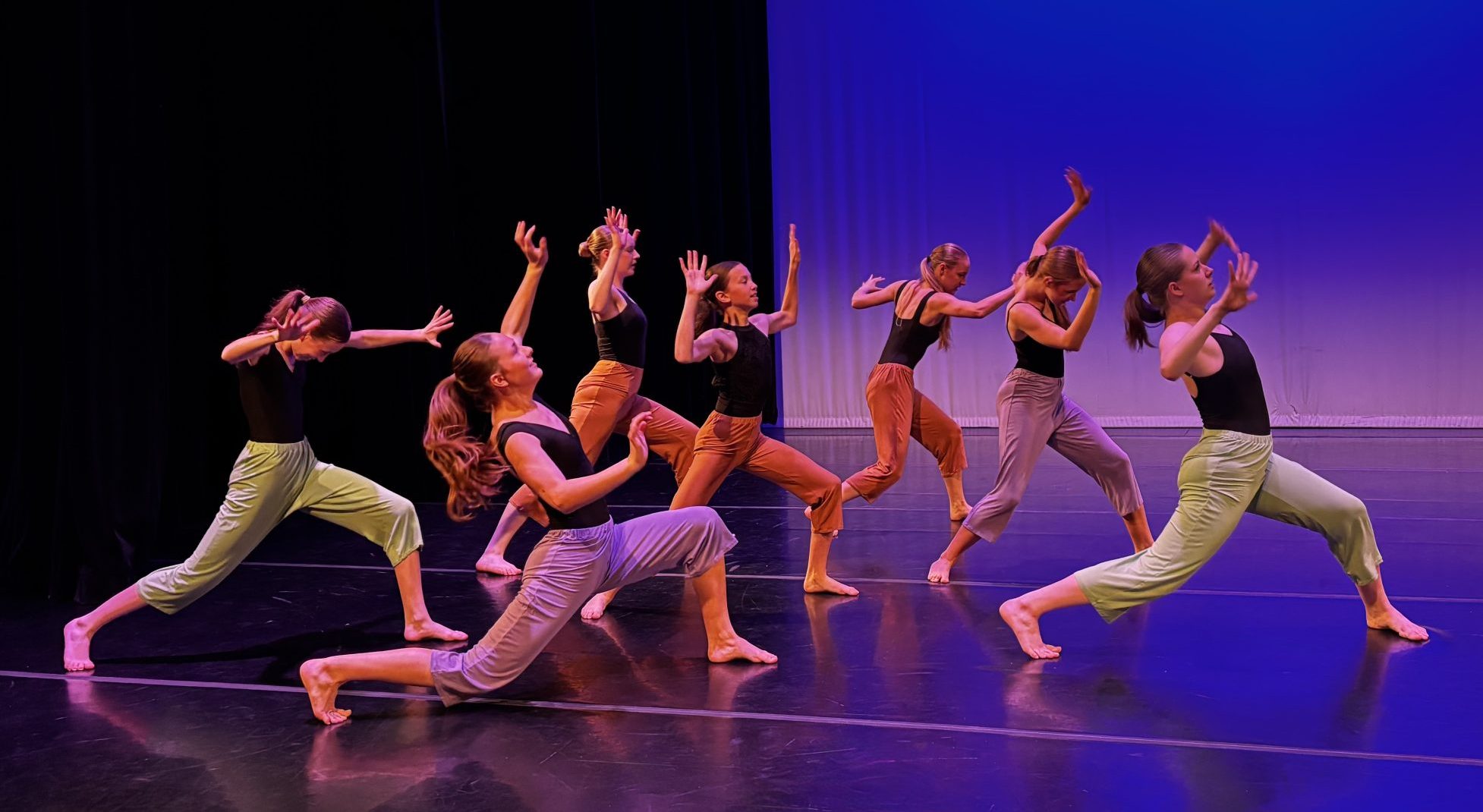
Featured photo by Leica Hardy of the Senior Jazz class performing You’ll Find a Way by choreographer Anastasia Wiebe at the 2026 Student Showcase.
_________________________
About the Author
Leica Hardy is a nationally respected master dance teacher with over 45 years of experience, known for her inspiring instruction and dedication to excellence in classical ballet and contemporary dance. An Honorary Doctor of Fine Arts and co-author of the Society of Classical Ballet’s 14-level syllabus, she has mentored students who have gone on to study and perform with leading dance institutions and companies across North America. Leica is available for guest teaching, workshops, and professional development. See her full bio here.
Subscribe
Subscribe to Words To Dance By by joining our mailing list. Please use the button in the sidebar to send us a message.
Copyright
All content on this blog is original copyrighted material, unless otherwise stated. Content on Words To Dance By may not be reproduced in any form without written permission from the author. We welcome the use of links to the original posts on this site. Correctly cited and attributed quotes or short excerpts are welcome and appreciated.